Community Foundation of North Louisiana (CFNLA) announces the release of Community Counts 2026. Community Counts, published by CFNLA since 2008, serves as a report card on the quality of life for the Shreveport-Bossier Metropolitan Statistical Area (MSA). Publicly available data is presented in six categories: Population, Economic Well-Being, Human Capital, Health, Social Environment, and Physical Environment.
The report, researched and compiled by Dr. Dave N. Norris and Dr. Amanda M. Norris, uses 41 indicators to evaluate and rank Shreveport-Bossier alongside 10 peer communities. Highlights this year include top 4 rankings in 3- and 4-year-olds enrolled in school, per capita personal income, per capita real GDP growth, and air quality. Most data in this year’s report was collected in 2024.
Community Counts aims to equip local leaders and organizations with vital information to monitor trends in economic and social indicators that affect our communities’ well-being. While the report does not fully explain the underlying factors of these trends, it serves as a pivotal tool for galvanizing community efforts towards addressing and resolving significant local challenges.
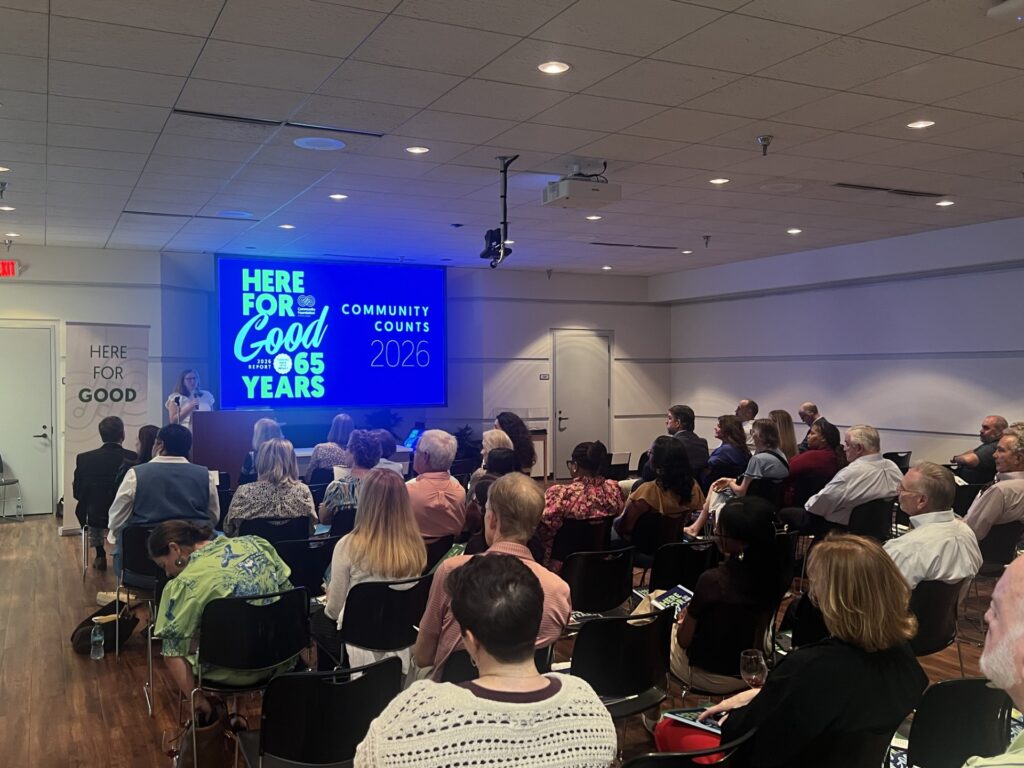
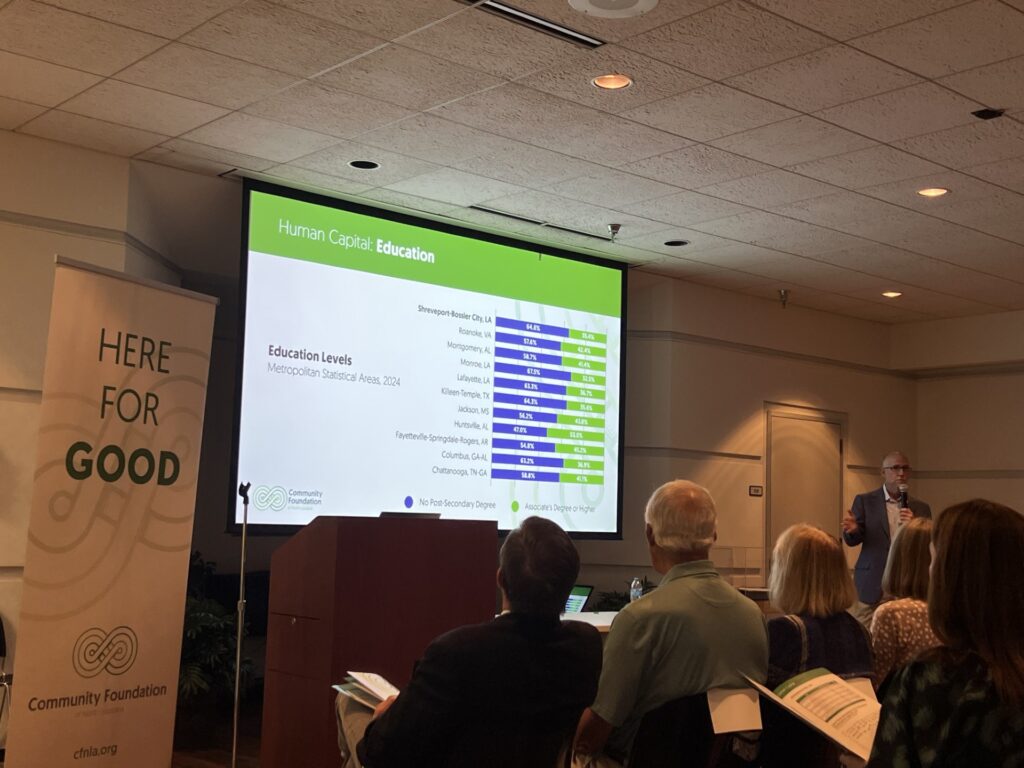
On September 23, Dr. Dave Norris presented an overview of Community Counts data at the Noel Memorial Library at Louisiana State University – Shreveport. CFNLA CEO Kristi Gustavson also highlighted CFNLA’s 65th anniversary with a look at the history and development of the Foundation since its founding in 1961.
Key findings from the 2026 Community Counts report include:
- Shreveport-Bossier ranks 4th among peer communities in the percentage of 3- and 4-year-olds enrolled in school (48.9%). National research demonstrates that children who attend preschool are more kindergarten-ready and have more long-term academic success than their peers who remain at home during this crucial period of early learning.
- Median household income for the Shreveport-Bossier MSA increased by more than $2,600 from 2023 to 2024.
- The Shreveport-Bossier MSA improved its standing among comparative communities in Median Air Quality Index in 2025, moving from 9th to 4th place. During 2025, air quality was rated as “moderate” or worse on just 31% of days, down from 50% in 2024.
- 28.0% of families with children under 5 years live below the poverty threshold.
- High school cohort graduation rates have risen more than 10 percentage points in the last decade, but 11.9% of 16-to-19-year-olds remain “idle:” neither enrolled in school, employed, nor active in the labor force.
- 7.5% of the Shreveport-Bossier MSA population lacks health insurance, which ranks 5th among the peer communities.
The data presented in Community Counts consistently reveals a relationship between poverty, education, and economic well-being within the Shreveport-Bossier MSA. In response, CFNLA is committed to implementing long-term strategies to help families break the cycle of poverty, focusing on quality early childhood education and evidence-based educational programs for at-risk students. In April 2026, CFNLA awarded $4.1 million in competitive grant funds to 69 local nonprofits. Over 80% of competitive grant funds awarded in 2026 went to programs addressing the issues highlighted in Community Counts, especially poverty, educational attainment, and health outcomes. For a full list of recent competitive grants, visit cfnla.org/competitivegrants/recent-grant-awards.
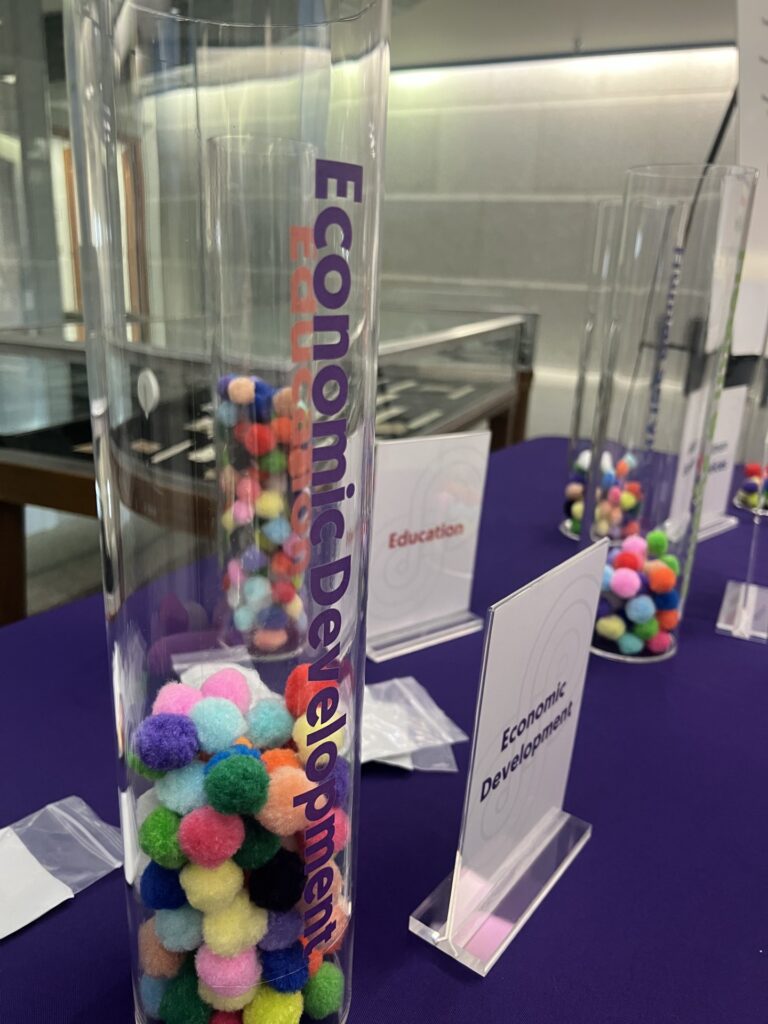
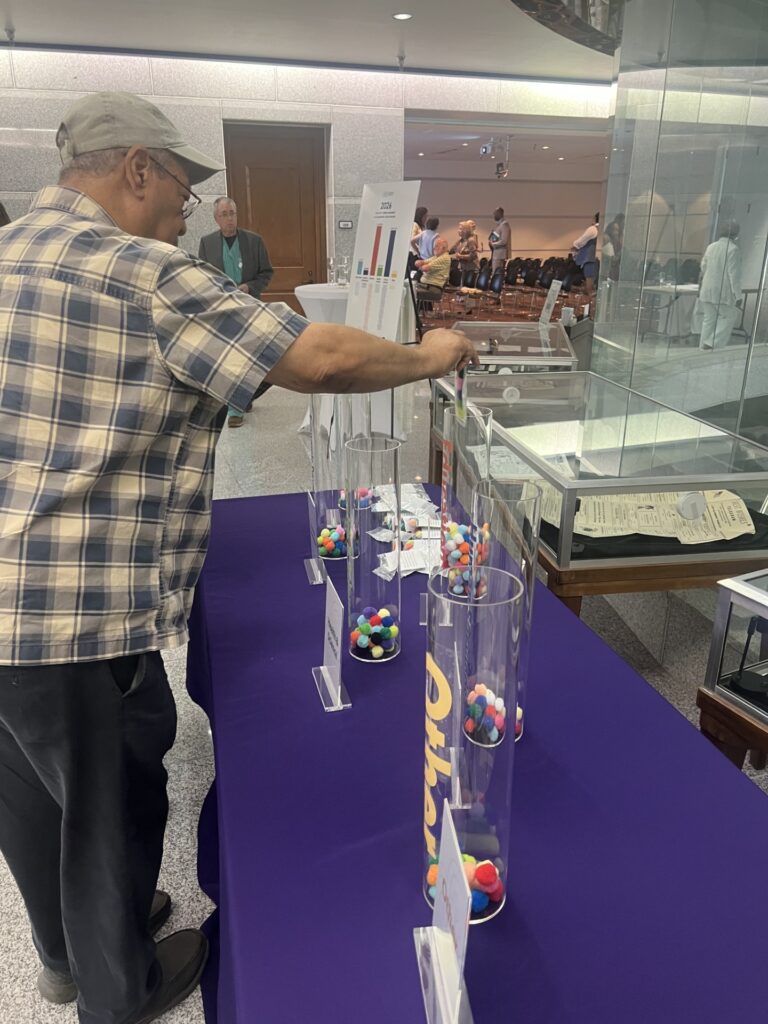
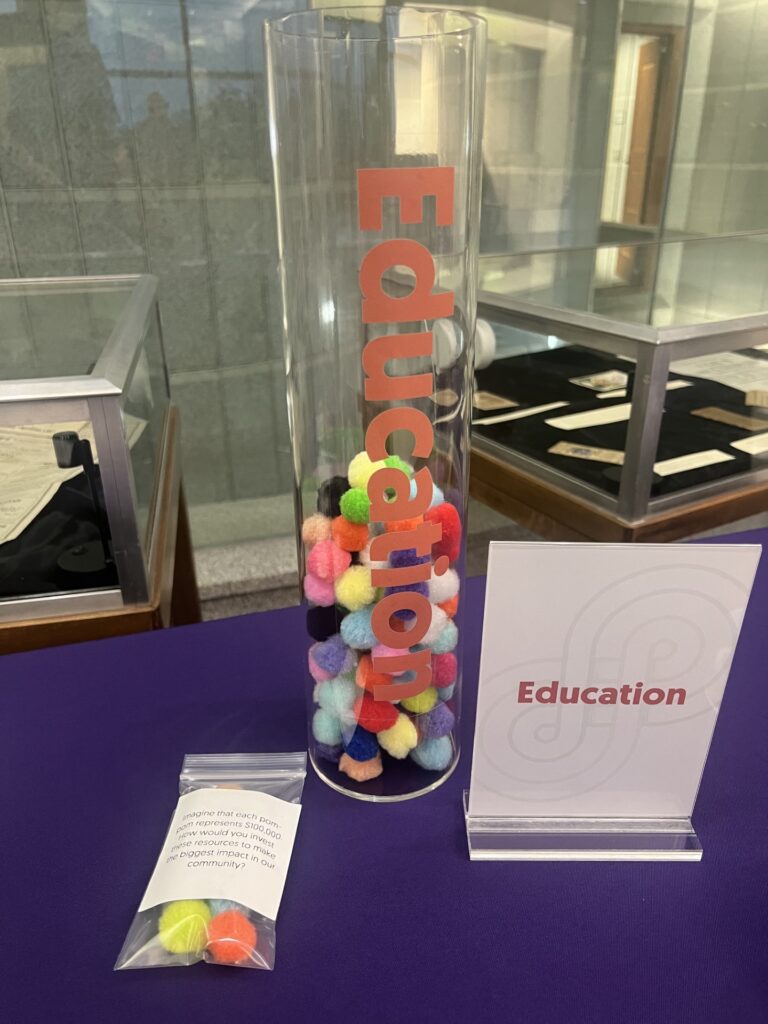
The Community Counts presentation also featured an interactive data exhibit developed by Callie Dean, a member of CFNLA’s Women’s Philanthropy Network and the Director of Applied Research in Nonprofit Administration and Research at LSUS. This interactive display allowed attendees to “be the philanthropist,” providing each with colorful pom-poms worth a symbolic $1 million to invest in broad categories commonly represented in CFNLA’s competitive grantmaking process, including Arts and Culture, Economic Development, Education, Health and Science, and Human Services. Participants were encouraged to use the information gleaned from Community Counts, along with their own knowledge and interests, to identify our community’s greatest needs as well as consider where their hypothetical investments could make the greatest impact.
To access the complete data report, please visit cfnla.org/data.